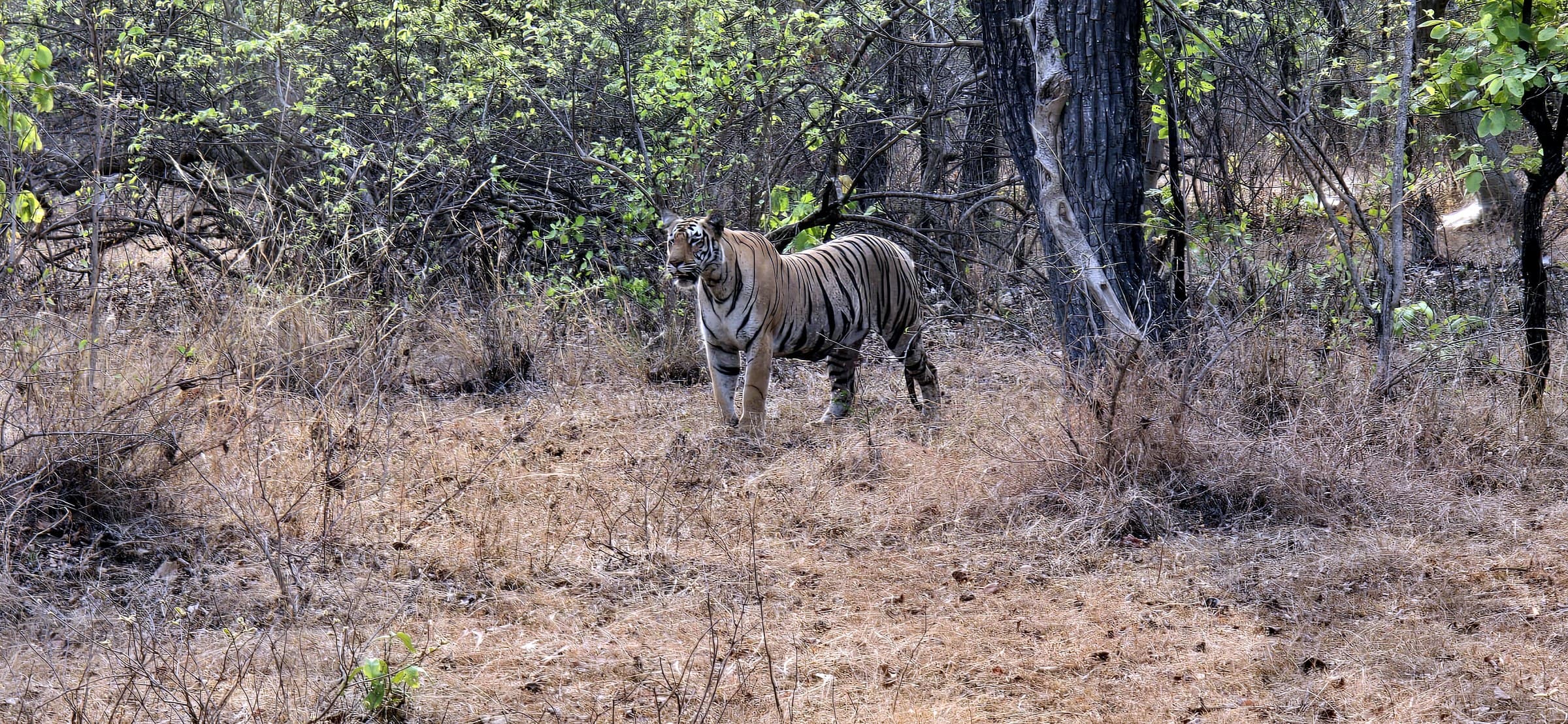
Tadoba's six core gates close 1 July to 30 September every year for the monsoon, but four buffer gates stay open. Here is the honest read on what you actually see, what it costs, and why monsoon attracts a specific kind of traveller.
Tadoba in monsoon is a real experience, not a consolation prize. The six core gates — Moharli, Kolara, Khutwanda, Navegaon, Pangdi, Zari — shut from 1 July to 30 September every year under forest-department notification. But the buffer zone stays open, and the forest in monsoon looks like nothing you'll see in the dry season.
This is the honest guide to what's open, what it costs, what you'll actually see, and who it's for.
Which gates stay open
Tadoba has four working buffer gates that operate year-round, monsoon included:
| Gate | Zone | Note |
|---|
| Agarzari | Buffer – South | Closest to Moharli core. The most popular buffer gate, rising tiger activity year-on-year. |
| Junona | Buffer – South | Quieter, near Chandrapur side. Good for weekend visitors from Nagpur. |
| Devada-Adegaon | Buffer – East | Strong for leopard, sloth bear, and dhole. Less tiger-focused. |
| Alizanza | Buffer – North | Bordering Kolara core. Grassland terrain, favoured by photographers and birders. |
Safari booking still goes through the official portal, mytadoba.mahaforest.gov.in, but monsoon-window slots almost never sell out — you can book a week ahead and get any gate, any time slot.
What you actually see in monsoon
| Wildlife | Frequency vs peak season |
|---|
| Tigers | 40-55% sighting rate (vs 80-95% in summer at core gates). They move less, find shaded waterholes, and stay deeper. |
| Leopards | Roughly the same as dry season — leopards adapt to monsoon well. |
| Sloth bears | Higher visibility — they're more active in cooler, wetter conditions. |
| Dholes (wild dogs) | Visible at Devada-Adegaon and Junona — packs hunt regardless of weather. |
| Birds | Excellent — resident species nest, frog and insect activity is huge, raptors are visible despite intermittent rain. |
The forest itself is the headline. Teak comes back to leaf, the ground is green, ephemeral streams run, and the light at dawn after a night of rain is unmatched. Photography on a clear monsoon morning at Alizanza or Agarzari is dramatically different — and arguably better — than dust-baked May.
What it costs
Compared to peak season (April–June):
- Safari fee: ₹6,000 (weekday) or ₹7,000 (weekend) per jeep on buffer, including entry, guide and vehicle — the same buffer rate as the rest of the year. Core safaris in season run ₹5,800–₹12,800 per jeep.
- Resort rates: 30-50% lower across mid-tier and luxury tiers. A property charging ₹12,000 per night in May runs ₹6,000-7,500 in monsoon.
- Transfers: Same as dry season — Nagpur to Tadoba is the same drive whether it's raining or not.
A monsoon 2N/3-safari trip lands around ₹35,000-45,000 per couple all-inclusive, vs ~₹74,000 for the equivalent dry-season Budget package.
What you give up
Be clear-eyed about this:
- Tiger sighting odds drop sharply. If you're coming primarily to photograph a tiger at 30m, monsoon is not the right time.
- Rain disruption. Half-day washouts happen. Most operators do not refund safaris cancelled for weather.
- Insect load is high. Pack DEET, long sleeves, and a hat.
- Some roads inside the buffer become muddy — your jeep route may change last-minute.
- Resort pools are not heated. It rains and it's cool — pool time is limited.
Who monsoon is right for
- Photographers chasing green forest, mist, and dramatic light rather than tigers.
- Returning Tadoba visitors who have already seen the core gates and want a quieter, varied experience.
- Birders — monsoon is breeding season for resident species and pre-arrival window for migratory raptors.
- Travellers on a tighter budget — same forest, with resort rates 30-50% lower.
- Long-weekend visitors from Nagpur, Pune, Mumbai who want to see Tadoba without competing for peak-season permits.
Who monsoon is wrong for
- First-time tiger safari travellers — Go in April-June at core gates instead. Tiger sighting is the whole point of the trip.
- Photographers chasing telephoto tiger close-ups — the cats are deeper in the forest.
- Anyone with limited monsoon-weather tolerance — heat and dust have their own challenges, but rain reroutes everything.
Pench is an alternative in monsoon
If you want core-zone safaris in July-September, Pench Tiger Reserve (just 4 hours from Tadoba via Nagpur) keeps its Turia gate open through monsoon under a different forest-department schedule. We'll cover that in Pench in Monsoon: The Quiet Side of Tiger Country.
Planning a monsoon safari with us
Our Tadoba Budget 3N package shifts to Tadoba Buffer Monsoon pricing in July-September — same inclusions, buffer gates, monsoon-rate resort, ~30% lower total. Tell us your dates on the contact page or message us on WhatsApp and we will send a custom monsoon quote within 24 hours.
The forest in July is a different country from the forest in May. Worth a trip if you understand what you're paying for.